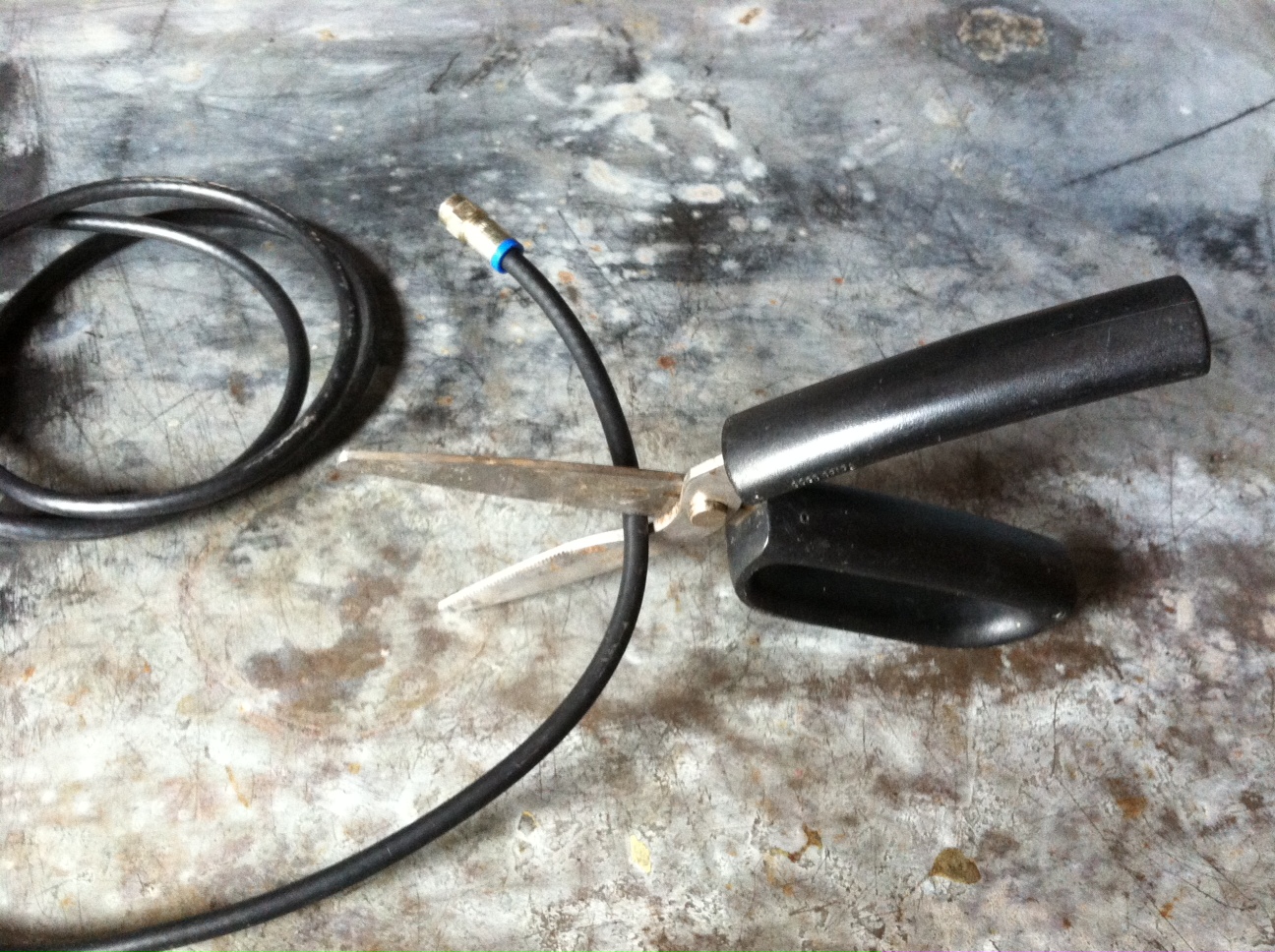
Cutting the cable is really more metaphorical than this, but it’s good imagery.
Recently, I cut the cable.
Well, technically there was no “cutting” involved. Really it was just a phone call wherein I said something along the lines of, “I no longer wish to subscribe to your services Mr and/or Ms cable and/or satellite provider person,” and wherein they then said, “Oh, let us offer you this six months of free [insert favored movie/porn/sports channel here],” and wherein I then proceeded to explain why I wouldn’t need that, what with me planning on selling my house and moving to the desert to live on the shady side of a cactus.
Then they offered to take me out to lunch and have my love child or something, if only I’d give them another chance and continue being the sure thing that I had been for the past five years.
Fortunately, I’d just eaten lunch, so I said, “I’m sorry. It’s not you, it’s me. Turn it off.” And with that, my TV set went dark. At least until I hooked up the Blu-Ray player, the Wii, the Playstation, and the Roku box.
You see, lots of people have been cutting the cable lately — saying no to the cable and/or satellite providers’ high prices, often poor customer service, and, erm, high prices. These are tough economic times, after all, and most cable subscriptions cost in the neighborhood of $100 or more. Sometimes much, much more.
But I didn’t cancel my satellite TV because of money. Okay, maybe it was a little bit about the money. But mostly it was because I didn’t need it anymore. I didn’t need nearly a thousand channels just so that I could watch the BBC (for Doctor Who and Sherlock, mostly) and be able to graze a smorgasbord of cooking shows in the lower-numbered section of the Viewing Guide. No, I had other options.
What options? I already listed a bunch of them a couple of paragraphs ago. What, weren’t you listening.
Okay, well, Netflix was one, of course. Even hobbled by the loss of its deal with Starz [Here’s a link, if my words sound like gibberish], Netflix still offers up a formidable range of programming for $7.99 a month. Sure, I may not be able to find Eurotrip (yes, I tried), but I can watch Mystery Science Theater 3000 and any number of movies with Ron Perlman in them, so that probably balances out.
However, for my primary wired TV connection, what lured me away from satellite was Roku — a hockey-puck-sized box that promised the internet at my feet (assuming my feet were pointed at the tv, anyway). There was Amazon, Hulu (regular or Prime), Vimeo, and dozens of other sites, services, and apps that could stream all types of assorted content straight onto my television from the Roku box.
One I’d been depending on, however, was HBO Go. Unfortunately, I didn’t do my homework. Okay, I’m going to break away here for a rant:
You can only get HBO Go if you already have a cable or satellite subscription that includes HBO? Really, HBO Execs? Then what’s the point? Oh, I get it. I really do: you can’t offer HBO Go on its own (and the same goes for Showtime, Cinemax, EPIX, and any number of other movie/original content providers), because with a la carte programming, who would pay for cable/satellite?
But, but, but … then why offer it? Am I likely to be struck by the uncontrollable urge to watch Game of Thrones and True Blood and Girls at the beach? No, if I have cable, I’ll probably just record them and watch when I get back from the beach, so, seriously, why offer it at all?
Okay, rant done.
On a related note, has anyone else noticed that almost the entirety of decent original television programming comes from HBO? HBO is single-handedly propping up the cable industry?
Anyway, excluding that one glitch in my hopes of a cable/satellite free TV cornucopia of wonder (to mix a metaphor), I’ve done well without the satellite dish attached to my roof. If I can’t find a show or movie on Netflix, Hulu, Amazon, or on free network over-the-air HD (hello HD rabbit ears) then I can probably find it down at my local DVD rental shop. Eventually.
Well, except for Eurotrip. Someone had stolen the shop’s copy. But, y’know what? I decided to read a book, instead. Now, where’d I put my Nook charger? Bloody battery is dead.
Maybe I’ll be heading into the desert soon, after all.